The 4-Hour Is Where Setups Get Serious.
By CryptoTraders · Market Education · 2026-06-22
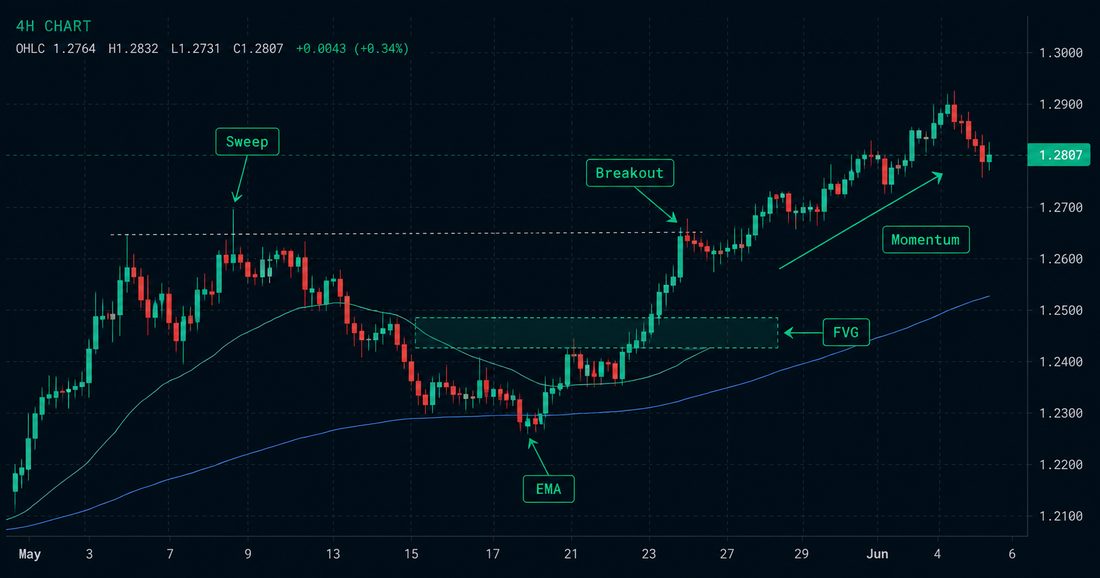
The 1-minute is noise with a heartbeat. The weekly is too slow to trade around. The 4-hour sits in the sweet spot: fast enough that setups resolve within a day or two, slow enough that most of the random intrabar chop is filtered out. It is the timeframe where swing structure and active trading meet, which is why so many durable setups form there.
Why the 4-hour matters
Each 4-hour candle aggregates a meaningful chunk of order flow, so its highs and lows mark levels that real participants defended, not levels one stray market order produced. Breakouts that clear a 4-hour level carry more weight than a 5-minute poke. Sweeps of a 4-hour high or low flush more committed stops. And the trend you read on the 4-hour is stable enough to plan around for the next few sessions rather than flipping every few minutes.
The setups worth watching
A handful of 4-hour setups recur. Breakouts, where price clears a defended level on a strong close. Sweeps, where a prior high or low is taken and rejected. Fair-value-gap confluence, where an imbalance left by a fast move lines up with structure. Momentum continuations, where a trend pauses and resumes. And key moving-average context, where price interacts with the averages swing traders actually watch. Each is a different question the market is asking, and each has a different answer depending on where it forms.
How to use it yourself
Drop to the 4-hour, mark the obvious highs, lows, and zones, and wait for one of those setups to form at a level that matters. The discipline is in the waiting. The 4-hour rewards patience precisely because it does not hand you a setup every few minutes. The cost is attention: a setup can form at any of six candles a day across dozens of pairs, which is more than any one person can watch.
Where the H4 Setups Scanner fits
That coverage problem is what the H4 Setups Scanner solves. It watches the 4-hour across the market and delivers every setup that matters, already categorised: breakouts, sweeps, fair-value-gap confluence, momentum, and key EMA context. Instead of flipping through charts hoping to catch the candle that matters, you get the setups sorted by type as they form, so you can focus on the ones that fit how you trade.